Monday, February 3, 2014

Presentation Schedule: Section 030

Presentation Sign-Up Sheet- 030

Date
Text
Name
2/4, Tuesday:

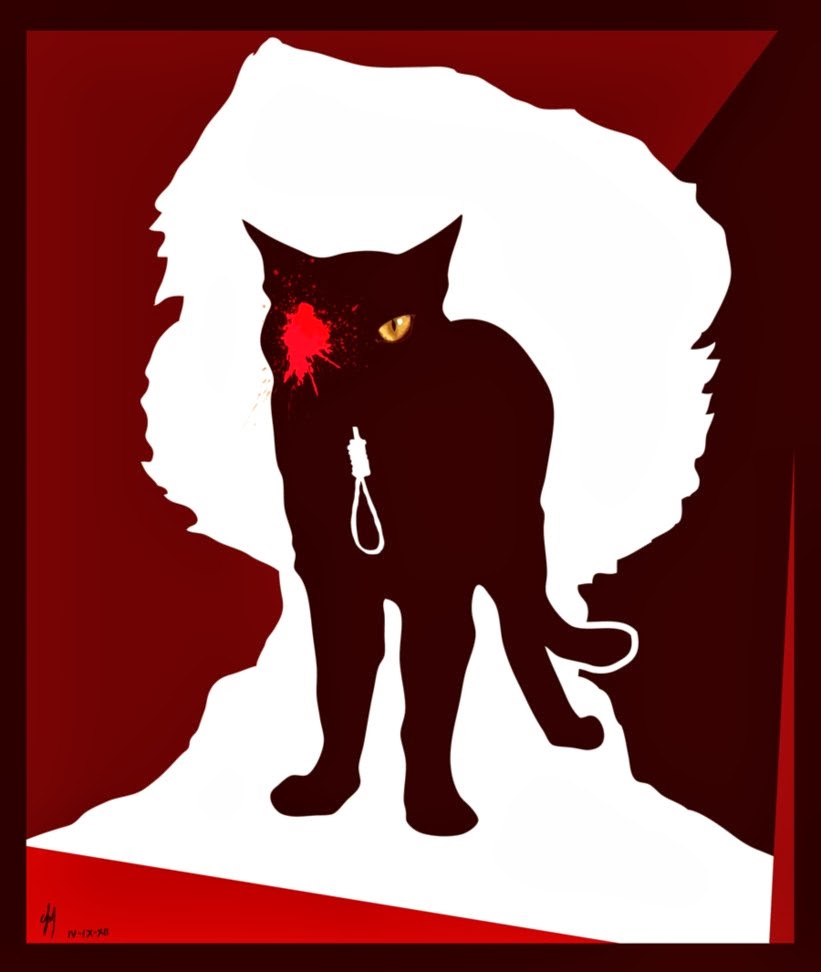
Poe, “The Black Cat”
Kevin Long
Gilman, “The Yellow Wallpaper”

2/6, Thursday:
Doyle, “The Adventure of the Speckled Band”
Shelby Chancey
Doyle, The Hound of the Baskervilles, Ch. 1-5
Candice Horde
2/11, Tuesday:

Doyle, The Hound of the Baskervilles, Ch. 6-10
Amber McDonald
Doyle, The Hound of the Baskervilles, Ch. 11-15
Taren Perkins
2/13, Thursday
Hawthorne, “Rappaccini’s Daughter” Now 2/18
Joseph Kliff
Poe, “The Fall of the House of Usher”
Ryan Arispe
2/18, Tuesday

Faulkner, “A Rose for Emily”
Karyna Gempesaw-Pangan
Welty, “Clytie”
Bailey Blount
2/25, Tuesday
Morrison, Beloved, pp. 1-50
Kiele Allen
Morrison, Beloved, pp. 51-100
Tyler Helton
2/27, Thursday
Morrison, Beloved, pp. 101-124
Taylor Vuicich
Morrison, Beloved, pp. 125-156
Stephen Ashworth
3/4, Tuesday
Morrison, Beloved, pp. 157- 173
AJ Herrera
Morrison, Beloved, pp. 174-195
Aaron Fitzgerald
3/6, Thursday
Morrison, Beloved, pp. 196-235
Harold Robinson
Morrison, Beloved, pp. 236-252
Taylor Dougherty
3/11, Tuesday

Morrison, Beloved, pp.253-278

Morrison, Beloved, pp. 279-324

3/13, Thursday
Stoker, Dracula, Ch. 1-6

3/25, Tuesday
Stoker, Dracula, Ch. 7-18
Maci Gregg
3/27, Thursday
Stoker, Dracula, Ch. 19-23
Alex Kipple
4/1, Tuesday
Stoker, Dracula, Ch. 24-27

Katherine Crocco
Carter, “The Lady of the House of Love”
Devin Horan
4/3, Thursday
Stevenson, Dr. Jekyll and Mr. Hyde, Ch. 1-5
Matthew Lis
4/8, Tuesday
Stevenson, Dr. Jekyll and Mr. Hyde, Ch. 7-18
Graham Lossin
4/10, Thursday
Le Fanu, “A Chapter in the History of the Tyrone Family”
John Schlechte
4/15, Tuesday
Hardy, “Barbara of the House of Grebe”
Amber Tarango
4/17, Thursday
King, The Shining, Ch. 1-15
Stephen Pitts
4/22, Tuesday
King, The Shining, Ch. 16-30
Brandon Richardson
4/24, Thursday
King, The Shining, Ch. 31-40
Dylan LeBeau
4/29, Tuesday
King, The Shining, Ch. 41-50

5/1, Thursday
King, The Shining, Ch. 51-58


*Remember if you are presenting on a novel, you must clear your article or chapter choice with me in advance to avoid repeat article/chapter summaries. I recommend selecting your article as soon as possible. Article preference will be given in the order you contact me.

Wednesday, January 29, 2014

Emphasis and Alliteration

Emphasis- A range of techniques for stressing a word, phrase, or idea throughout a story. A writer may use repetition of a single word (He felt nothing but fear, fear, fear), by using different type-face (He felt nothing but fear), or by building a series of synonyms (He felt nothing but fear, terror, horror). An author may also repeat a unique word or phrase throughout a story to draw emphasis to a certain idea, characterization, etc.
"This I have known ever since I stretched out my fingers to the abomination within that great gilded frame; stretched out my fingers and touched a cold and unyielding surface of polished glass" (Lovecraft, "The Outsider" 321). 

Alliteration- When the initial sounds of a word, beginning with either a consonant or a vowel, are repeated in close succession: "Such a lot the gods gave to me-- to me, the dazed, the disappointed; the barren, the broken" (Lovecraft, "The Outsider" 316). Alliteration may accentuate the beauty of language in a given context, or unite and emphasize words or concepts through a kind of repetition.

Tuesday, January 28, 2014

Presentation Criteria

Presentation Criteria:
On the day we discuss your chosen text as a class, you will be responsible for starting the discussion in a 8-10 minute presentation. Your presentation should include the following components:
  1. Provide a thematic summary of the day's reading; focus on recounting the text's major plot points through the lens of one of the story's main themes. This will allow you to keep your summary relatively brief and will also orient the class to the specific focus you will carry into the interpretation and discussion portions of the presentation.  

  2. Select a scholarly article or book chapter from the library MLA database that discusses your chosen text. The scholarly article or chapter should be at least eight pages in length. The purpose of this part of the assignment is to familiarize you with professional literary arguments and help you understand critical lenses scholars use to analyze and interpret literature. Briefly summarize the author's argument for the class. What ambiguous issue is the author providing an interpretation for? What is the author's interpretation? Is it based on close reading, historical, biographical, social, or theoretical contexts, or a combination of several of these? You will email me a citation for your article or chapter in MLA format the day before your presentation is due. Example: Tomlinson, Niles. "Creeping in the 'Mere': Catagenesis in Poe's 'Black Cat' and Gilman's 'The Yellow Wallpaper.'" ESQ: A Journal of the American Renaissance 56.3 (2010): 232-268. 

  3. Finally, provide two questions to generate the day's discussion of the text. Although the elements you identified for the previous requirements do not necessarily have to lead up to these questions, the more related the elements of the presentation are, the better your presentation will be.
Presentation Selection Procedure:
You will sign up for a text on Thursday, January 30. You can select either a short story, or a portion of one of the novels. There will only be one presenter per text or novel section.  

Thematic Summary Examples:
"The Tell-Tale Heart” is about a neurotic man’s murder of an old man living in the same house because he finds the old man’s “vulture eye” unbearable to him. After spying on the sleeping old man at midnight for a week with the intention to kill him, the protagonist jumps into the old man’s room on the eighth night, murders him, dismembers the body, and buries it under the floor. When three policemen come to search the house, he hears the increasingly loud beating of the old man’s heart, and takes it that the policemen have also heard it but pretend not to have. He finds the policemen’s “dissembling” most unbearable and admits his murder. -- From Dan Shen's "Edgar Allan Poe's Aesthetic Theory, the Insanity Debate, and the Ethically Oriented Dynamics of 'The Tall-Tale Heart'" in Nineteenth-Century Literature.

The presence of Borel’s protagonist in Spain is not without controversy; the disappearance of several locals causes rumors to circulate about the nature of the scientist’s experiments. The aging Vésalius takes as his bride Maria, a young woman from a prominent local family, but their nuptials only add more grist to the rumor mill. Unable to consummate his marriage, the anatomist soon returns to his laboratory to re-immerse himself in his work. While he endeavors to further scientific knowledge, his neglected wife takes a series of lovers, each of whom disappears after a single night of passion. The stress of the disappearances takes its toll, causing Maria’s physical health to fail and leaving her a virtual invalid. Several months later, near death, she summons her husband to her bedside to confess her infidelities and to beg his forgiveness. The anatomist, unmoved by his spouse’s repentance, mercilessly drags her from her bed and takes her to his laboratory. There, he reveals that he is responsible for the disappearances, aided and abetted in his crimes by his former governess, who had become his wife’s chaperone. Maria’s lovers, Vésalius explains, were dissected because of his thirst for knowledge about the human body. Overcome by the gruesome sight of her lovers’ desecrated remains, the young woman faints dead away. The following morning, a coffin is removed from the home, ostensibly carrying the bride’s remains but which the undertakers realize has a curiously hollow sound. The narrator cryptically observes that if we only had access to Vésalius’s chamber of horrors, we would find a blond cadaver on his dissecting table, a not so subtle allusion to Maria’s grisly fate.-- From Kathy Comfort's "Lycanthropic Frenetism in Petrus Borel's 'Don Andrea Vesalius'" in the European Romantic Review.